Emilie Bridon
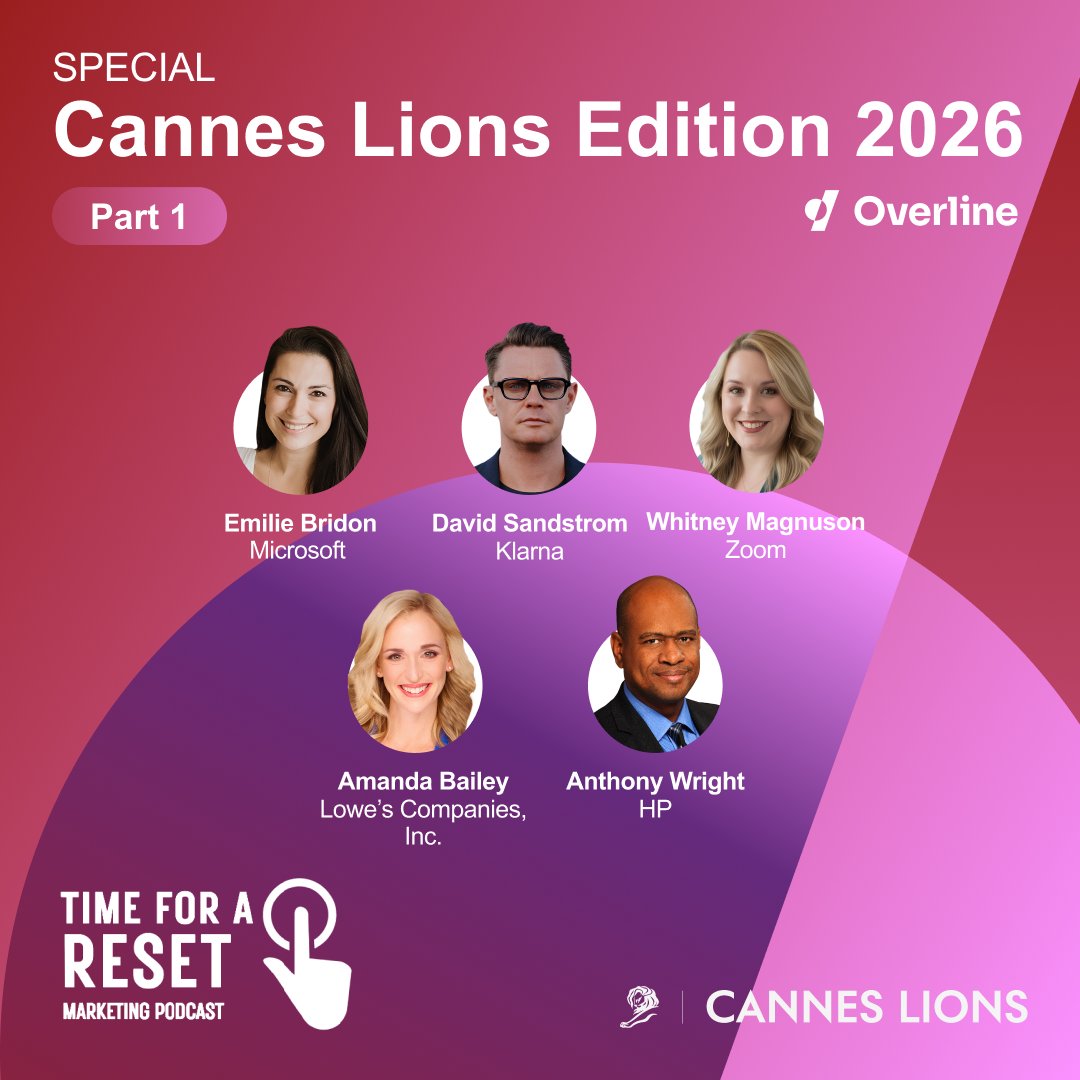
[00:00:02] Nick King: Welcome to the first part of Time for a Reset, hosted by Overline Consulting, recorded live from Cannes Lion twenty twenty six, where we sit down with senior marketers from global brands and retail leaders to discuss the biggest question shaping modern marketing and the retail media landscape. In this episode, we’re chatting to Emily Biden, head of America’s Concealed channel marketing for Microsoft, David Sandstrom, CMO of Klarna, Winnie Magnusson, VP head of brand and media at Zoom, Amanda Bailey, VP customer marketing and loyalty at Lowe’s Companies, and Anthony Wright from HP, who is their head of sales and business development. We’ll explore what they learned from Cam and look at their views on the shifts transforming our industry from changing consumer expectations and emerging technologies to new approaches to creativity, culture, and growth. We’ll also describe what’s driving change in their business, the opportunities they see ahead, what marketers should be resetting as they prepare for the future. Emily Biden, welcome to Time for a Reset.
[00:00:59] Emilie Bridon: Thank you. Glad to be here.
[00:01:01] Nick King: Great to have you on. The podcast is Time for a Reset. What is it that you’re looking to reset in marketing, whether it’s off the back of can or just something that you feel is important to you?
[00:01:11] Emilie Bridon: Yeah. I mean, I think the biggest thing is reset expectations on what marketing can deliver. I think there’s lots of opportunities to tie things together. You know, from where I sit, I live in the retail space. So how can marketing help actually drive sales? And it absolutely does. So resetting expectations of what marketing can do, what KPIs to look at is probably what I would respond.
[00:01:35] Nick King: Okay. You talk about how retail is evolving. Where are you seeing that opportunity for retailers, either with Microsoft or just in general, just having the opportunity to evolve how they think?
[00:01:47] Emilie Bridon: Yeah. I didn’t realize that I would love being in retail as much. I’ve been at Microsoft twenty years, and ten years of my career was spent in retail. What I love about retail is the aspect of being closest to the customer. So you are truly at the frontline of driving a sale with a customer, both in store and online. And I think what’s at the forefront today is really the investments in retail media networks. Across retailers, they have incredible networks, incredible audiences that you can tap into to really go after the goals and objectives you have as marketers. And partnering with the retailers to bring that to life, both in store and online, and experiences that tie together to help drive to that sale is just super powerful.
[00:02:31] Nick King: Cannes is where so many networks launch. What have you seen at Cannes that’s exciting you as sort of the future of the industry? Where have you seen that opportunity?
[00:02:40] Emilie Bridon: I mean, I think last year at Cannes, it was very interesting. I think creators were everywhere. I think this year, creators are even more at the center. And what’s super interesting is I was just in a conversation with a retailer talking about how do we bring creators into a store, drive events, and have them at the heart and center of some of the marketing pieces that we will be launching. And so I think creators now are becoming more of a staple in a lot of the marketing aspects that we do, but also creators, they’re consultants. That’s what they’re becoming. And so I’m starting to see that at Cannes this year where creators are coming in with brands to have conversations about how they’re thinking about going to market, how they think about their audiences, and how they can partner with brands, which I think is a very unique factor to what last year was about, which had a lot of great connections with creators. But this year, it’s truly about the creators and them being a brand and partnering with brands to go after different goals.
[00:03:46] Nick King: Yeah. No. I think I really feel that creators in retail is sort of something that it’s been such a VR metric, and all of a sudden, we’re starting to see that opportunity. I’m always interested what people think about creators and their authenticity because sometimes, for certain bits of marketing, they struggle. How do you see that authenticity coming through and the challenges that some of them face?
[00:04:06] Emilie Bridon: Yeah. You know, I think authenticity is critical, but it may be an overused word at this point. How we think of partnering with creators in the retail space is really trying to find the creators that match with our goals and objectives and that they have goals and objectives of growing audiences or leaning in to tell different stories. So we always partner with creators that we can find shared goals, objectives, and audiences. We’re always looking to grow and expand in different audience sets. And so how do we find those creators that are interested in partnering with Microsoft, leverage Microsoft technology to share unique use case stories? And what I mean by that is we’re really looking for audiences or creators that have audiences, whether it could be students or gamers or creators that they lean in to tell stories and build those unique stories to say how they’re using the technology. So an example I could give you is from a student perspective, partnering with student creators to say, hey. I’m struggling studying. It’s really hard. My study group can’t meet all the time. So what can technology help me do? Well, leveraging Microsoft Copilot, it can help you build a study guide, even a quiz where you can start to interact based on what is coming out of your classes and having creators share those stories as use cases, not putting necessarily the technology at the center of the story, just sort of in the background as they’re sharing how they’re doing something is really important to us. And then, of course, we always partner with creators that are able to sell a very clear call to action. So, typically, these creators, they know what they’re doing from a sales perspective. You know? Head to my bio for a link to the latest products, And then we bring that creator content, not only in their own social feed, have media running behind it, but we also partner with the retailers to bring it to life at retail.
[00:06:07] Nick King: Yeah.
[00:06:07] Emilie Bridon: So whether it’s in store or online, we bring those creator stories based on those use cases that they’ve helped more
[00:06:19] Nick King: open to this, or is it kind of that everybody’s embracing?
[00:06:23] Emilie Bridon: I think a lot of retailers are very open to this, and we are working together to figure out what is driving the right engagement in sales at retail. But I think storytelling is such an important part in trying to understand and discover products that we haven’t seen anybody resistant to that. Yeah. I think it’s more of we may be at the forefront as we’re not seeing a lot of other brands bring in creator content in other aspects outside of social necessarily, whether they’re feeding I mean, today, we’re working on feeding a lot of that content through our retail media networks as well as on these landing pages that I was just talking about.
[00:07:02] Nick King: Yeah. And I really feel like the measurement piece, you can’t avoid even though it sits at that top end of the brand. How are you approaching that measurement piece and trying to understand ultimately, you talked about sales earlier. How is that impacting?
[00:07:15] Emilie Bridon: Yeah. You know, I think as marketers, always important to look at the right KPIs. From a retail perspective, creators at click through rates, how much traffic they’re sending to the retailers, and how is that traffic converting. And those KPIs typically perform very strongly when we’re feeding in creator content versus branded content. We’ve done a lot of testing around that, and creator content is just outperforming a lot of our branded content right now.
[00:07:54] Nick King: Yeah. You talked about some branded content and, I guess, other parts of the funnel. As marketing just seems to get more and more fragmented, how are you advising partners, advising advertiser, advising networks to think about that fragmentation and bringing in or whether it could be content or whatever it might be?
[00:08:09] Emilie Bridon: Great question. I would say it is super fragmented. I think a lot of what we are trying to build on, we’re correlating pieces right now. I think it’s not in a perfect environment. I think when we look at top of the funnel, you’ve got a certain set of impressions and different KPIs that you’re looking at. And then how do you tie that all the way down to a sale? It’s difficult. I’m not gonna lie. It is one of the hardest things, but we do try to drive investments with our partners to look at investments where we’re only seeing the results that we can track, which does limit us in terms of investments. But when we’re investing in with our retailers on their retail media networks, that is the power of the retail media networks because it is full funnel marketing. They can do all the way through the funnel, and you’re going after those right audiences. And they do offer services off network as well. So all of that ties really well from a KPI perspective. It’s more if you’re driving investments without the retailers driving traffic into retail. Now you’ve bifurcated your data, so you kinda have to drive correlation to what is possible as you’re testing and learning.
[00:09:18] Nick King: Yeah. Sort of bring it back a little bit to Cannes. We are in Cannes. What have you been excited to see? Is there anything that you’re hoping to see more of through the rest of the week?
[00:09:27] Emilie Bridon: Yeah. You know, it’s always great to see colleagues that you typically don’t see for a year. But from a work perspective, you know, I think what’s exciting to see is definitely the investments that brands are making across AI, creators, and just some of the innovation that’s being driven in both of those spaces, I think, is exciting. I think from a creator perspective, I think seeing creators lean in to telling more of how we can partner with them. I’ve had a lot of conversations around how they like to partner with brands, and even some of the creators coming back to us just sharing ideas on how they can help with our goals and objectives is very exciting. They are truly becoming potentially agencies of their own.
[00:10:16] Nick King: That’s a really interesting point around how creators are thinking about themselves as agencies. What advice do you have for creators when they’re coming to work with other big organization, whether it’s Microsoft, but also those networks that you work so closely with?
[00:10:29] Emilie Bridon: Yeah. I would say to all the creators out there, I mean, I think if you’ve got a great idea, I’m sure a brand would listen to it. But I think the biggest thing is really understanding the products and understanding the goals and objectives that that particular brand or team that you’re talking to. Of course, Microsoft is so large that from where I sit, I lead the retail team. And so from a retail perspective, our goals and objectives are to drive sales. And so with that, partnering with creators and having creators come in with ideas on how they believe they could tell stories to help our goals and objectives. I mean, I think understanding the product, understanding what the goals and objectives that that particular brand is going after, And then pitching a few ideas, short and sweet, I think, is always a great opportunity to just see where things land.
[00:11:20] Nick King: Yeah.
[00:11:20] Emilie Bridon: I’ve heard some great ideas this week, so I’m very excited to learn more about
[00:11:24] Nick King: it. Busy week next week.
[00:11:25] David Sandstrom: Yes.
[00:11:26] Nick King: And where we often finish is you’ve worked in industry twenty years. Yeah. I feel like we’re in a massive disruption for people coming into the industry. What would be your advice for people that are looking to join into any parts of marketing, but I guess specifically to the creator side?
[00:11:44] Emilie Bridon: Yeah. I would say don’t be afraid to put yourself out there. I think networking is such a valuable skill as you’re entering the workforce or just starting your career. I think be open to trying new things, and make sure you’re always raising your hand to be the next person to be trying that thing.
[00:12:05] Nick King: Fantastic. Emily, thank you so much for your time. It’s been great to meet you.
[00:12:08] Emilie Bridon: Thanks for having me.
David Sandstrom
[00:12:10] Nick King: David Sandstrom, welcome to Time for a Recess.
[00:12:12] David Sandstrom: Thanks for having me.
[00:12:13] Nick King: Pleasure. We always start with what would you recess in the marketing industry? What’s your focus and where are you thinking at the moment?
[00:12:21] David Sandstrom: I think one thing that is almost happening by itself now is the fact that there used to be a monopoly on the term creativity by people who were educated creatives. Right? A copywriter and an art director had the monopoly, and they were the only one who were allowed to be creative. What we’re seeing now with AI is the democratization of creativity in a fantastic way. I see, in my organization at least, so much creativity being unleashed on a daily basis because people now have the tools to do so. So that is a fantastic thing to see, especially being here in Cannes, talking about creativity. I love that.
[00:12:57] Nick King: Yeah. Where specifically you seen that creativity? Say for us, is it in literally the creative, or is it the work and the planning? Or
[00:13:04] David Sandstrom: I think across the board. I think I’ve also been a bit frustrated in the past. I used to lead a big ad agency that creativity was confined to an image and some text connected to it. Right? But creativity can be in the strategy, in the business model, what kind of incentivization structures we find. But everyone now having a sparring partner twenty four seven, and they’re pretty smart sparring partners nowadays as well, enables them to unleash more of what is within them. And I think creativity will be one of the traits amongst marketers, broadly marketers, that is highly valued in the future.
[00:13:40] Nick King: Yeah. No. I agree.
[00:13:41]David Sandstrom: And I feel like when we were
[00:13:43] Nick King: growing up, you were either creative or you weren’t creative.
[00:13:46]David Sandstrom: Yeah. It’s
[00:13:46] Nick King: a binary approach, and things are Exactly. Everybody can imagine.
[00:13:49] David Sandstrom: And I think we see the same slowly happening within coding and creating not only campaigns, but creating things, apps, tools, workflows. I’ve had marketeers who’ve never ever touched coding, never understood anything, are now building their own for their everyday use cases, workflows, tools, whatever it is. Right? So I think a lot of people have more within them, and I think AI is a tool to release that.
[00:14:17] Nick King: Yeah. And, obviously, where it can, what have you seen that’s excited you, either in the creative or the AI space as you’ve sort of been in the panels and the events of this week?
[00:14:28] David Sandstrom: I think this is, like, my fifteenth year or something like that. So what interests me is, like, some themes have been here since iStar and probably fifteen years before me as well. How do you measure brand impact? Those kind of questions are still unresolved here. Other things that interest me are, like, big trends. So one thing that I’m currently very interested in, also now during the World Cup, is clipping. So, basically, the new phenomenon for the social media platforms where mostly just ordinary people take lengthy clips and clip them down to small clips, make a lot of money on that, But the big trend is now coming to brands. If you look at, for example, the Nike commercial that’s running for the World Cup is, I think, in ten, twelve, fifteen minute commercial, and you’re now starting to see all of this clipping. So it’s interesting to put advertising front and center again. I think advertising lost its mojo for a couple of years. And now with the help of clipping and really using the power of these social channels, taking a long form ad and making it TikTok compatible. I think that’s an interesting trend that we’re seeing, and I’m happy to see many people here talk about it. I met Gary v yesterday who was raving about that. So yeah.
[00:15:37] Nick King: Yeah. No. It’s definitely something. How are you thinking about that for Klarna?
[00:15:42]David Sandstrom: I am quite cautious when it comes to some things to just jump straight in. One thing that has been a theme coming back over and over again here in Cannes as well is how do we insert our brand into pop culture. Right? That is a question that has, like, everyone wants to do that. I don’t think every brand should do that. I think clipping, TikTok, this culture is fantastic for a brand like Nike, Tesla, all of the the Ulta Beauty, Sephora, all of those. Right? We need to find our way before we do that. Just doing clipping because of the sake of clipping is probably not something we want to do because relevancy is really what we want to go after. Right? So we’re still pretty far from recording a ten minute ad for Klarna that we clipped down. We’re not there yet. Yeah.
[00:16:27] Nick King: Well, I think that’s really wise. I think Cannes has this tendency to go, everybody should follow this direction and everybody does it.
[00:16:35]David Sandstrom: I think, unfortunately, Cannes and Twitter or X are potentially very dangerous channels, right, because there’s so much innovation going on. Half of it is also just really good marketing. Right? It doesn’t really work. Right? But there is so much going on. So as a marketeer, I think one of the most important traits you can have is confidence. Confidence in your strategy, confidence in your tactics. Because if you are insecure, Cannes is gonna eat you alive. You’re gonna leave more confused and more worried than ever.
[00:17:05] Nick King: Yeah. You sort of talk about that confidence. You’ve led Klarna into the pop culture space in terms of your time. You obviously have the confidence to do that, but was that a challenge within the c suite to convince people? Or
[00:17:18] David Sandstrom: No. I mean, we have a very creative and a very entrepreneurial CEO that obviously helped. Right? He is not very buttoned up when it comes to these things. The challenge he gave me when I joined was to turn Klarna from a stiffer b two b brand into a consumer franchise, and that is the journey we’ve been on. So he’s been very supportive, and that obviously helps. Right? So I don’t think the Klarna playbook is for everyone, but my team so the CXO team at Klarna has been very supportive, especially as we’ve started to see the effects come into play. More people talk about us. More merchants wanna partner with us. More consumers wanna use us. When you see the compounding effect of building a household brand, I think that life gets much easier.
[00:18:02] Nick King: Yeah. And you talked about building a household brand there. In sort of this increasingly fragmented world, how do you think about brand building versus that sort of Doctor elements that we all have to approach? Or how does that come across in terms of the work that you’re doing?
[00:18:18] David Sandstrom: I mean, I unfortunately believe that the marketing world in general went a bit overboard in the last couple of years when it comes to performance or Doctor marketing, whatever we call it. Right? I still very much believe in the strength of brand building, the strength and the impact that a strong brand has on almost every other KPI. So we try to embed it almost everywhere. Right? Then again, I’m also a big believer that most of the brand is built in the product. Yeah. And so what we try to do with our marketing is make Klarna interesting, make Klarna relevant, and make Klarna almost a bit mysterious enough to make people say, hey. I wanna try this. But the brand itself is very much built in the product. So, basically, we make a promise broadly in marketing, but we deliver on that promise in the products, and that is where
[00:19:08] Nick King: the brand is built. Interesting. You’ve had a long career within the industry. I feel like it’s very challenging for people coming in. What’s your advice to new entrants? Yeah. With this quite senior group that can quite often. How do you advise people to enter the industry and progress up into some more senior levels?
[00:19:26]David Sandstrom: Yeah. I mean, the world seems torn on this one, but I actually believe that being in an entry level role right now or just leaving uni is one of the best things you can have. Right? You are energetic. You are curious. You have the smartest AI tools in the world to make you feel and look senior. So I’m actually a bit envious of the people that will now accelerate. So, again, the world is a bit torn. Some say, oh, it’s gonna be so hard for entry level positions. I’m in the camp where I say it is a fantastic opportunity. You are way more energetic. You’re way more curious. You spend way more time on the platforms that actually matter. I had a dinner yesterday. Three senior people on that dinner said, I don’t even have the TikTok app. Like, that to me is mind blowing. It’s 2026. It’s mind blowing. You don’t have to doom scroll, obviously. Right? But come on. And that is where I believe that young people, they should really lean into the fact that they are the future, and I believe that AI is not gonna replace them. It’s gonna accelerate them. They’re gonna feel like superhuman.
[00:20:31] Nick King Fantastic. David Sundstrom, thank you for your time. Thank you.
Whitney Magnuson
[00:20:36] Tiffany Willburn: Well, I’m excited to have a chance to chat with you, Whitney. You are a very experienced marketer. And because of that, I’m very interested in getting your perspective on balancing brand and performance. It’s a dynamic that every marketer is dealing with, but I’m very curious to hear your own POV on that. So in an environment where every marketing dollar is being scrutinized and has to be justified, how are you balancing both long term brand building with your short term performance?
[00:21:06] Whitney Magnuson: Yeah. It’s such a challenge for us. Zoom has a really unique challenge right now because we have 99% unaided brand awareness, which many brands would kill for. Right. But it’s a very shallow association in that most people still associate Zoom solely with video communications. Right. And so we’ve really evolved our platform a lot since the pandemic era. We now have line of business tools for CX professionals, for marketing and sales professionals. We have our full AI enabled suite that helps you take conversations wherever they may happen, even if they’re not happening in Zoom, into completed work, wherever that is happening, even if it’s not happening in Zoom, and people don’t know that. And so for us, shifting that brand perception is incredibly important, and that’s not something that can be done if you’re just targeting a very, very narrow audience in mid and lower funnel. Right. So we saw a large need for brand advertising, and that’s why this past year, we actually launched the largest brand campaign that Zoom has done ever to date. That’s our Zoom Ahead campaign. Our first TV commercial launched with Boeing Yang as the star, so that was exciting. We did a lot of linear. We did a lot of out of home. We did quite a bit with creators as well. And then we use a brand to demand model. So the messages that we start within the brand start to come into our demand media. But it’s still a challenge because in a very product driven organization, I think we as marketers, as an industry, overtrained people on Last Touch. Right. And so there’s this expectation of, like, well, you ran that campaign, like, a month and a half ago. Why don’t you have revenue results to show you? And it’s like, that’s not how brand works.
[00:22:45] Tiffany Willburn: Right. Right.
[00:22:46] Whitney Magnuson: So it’s been a lot of internal education on what actual success looks like in the brand space, the timelines of when we should start to see different signals Right. And then how that then comes into our demand, the efficiencies that we’re starting to see in our demand media, our performance media based on the fact that we’ve also had brand and market.
[00:23:07] Tiffany Willburn: Right. When you were talking about the new campaign that you all just launched, earlier, you and I were having a conversation about affiliate marketing and its role in your business. Did you include affiliate marketing as a component of that?
[00:23:19] Whitney Magnuson: So another thing people don’t realize about Zoom, yes, we are a traditional b to b business, and about 60% of that business is serving enterprise clients.
[00:23:27] Tiffany Willburn: Right.
[00:23:27] Whitney Magnuson: But about 40% is actually ecommerce on our website. So if you’re a small business owner, if you’re a solopreneur, those are all people that are coming and doing direct ecommerce transactions to get up and running that very same day. Right. And so we see affiliate especially as being a great use case in that arena. It helps us stay cost capped in whatever we’re doing. We have the ability to lean into, like, creator affiliate programs where they’re commission based. We’ve launched some new programs with credit card providers, for example. So really trying out some new things in that space to give us more ways to reach our customers in the channels that they’re looking for via affiliate partners who they already know and trust.
[00:24:09] Tiffany Willburn: Yeah. Well, being a marketer myself, I am constantly in awe of the fragmentation in the customer journey that’s taking place. How are you adapting your marketing strategies to be more effective and efficient with the fragmented customer journey reality that we’re all living in.
[00:24:28] Whitney Magnuson: Yeah. I mean, there’s been so much debate here at Cannes and other places around, is there even a journey? Is there a funnel anymore? Is the journey dead? I think the real challenge is not just fragmentation. It’s that consumers have gotten really good at tuning out things that aren’t relevant to them in that moment.
[00:24:48] Tiffany WIllburn: Right.
[00:24:49] Whitney Magnuson: And that is not necessarily getting better as we get into this proliferation of AI content flowing into all of these media channels. I’m a big believer in creative and a strong insight really being the thing that can break through all that noise and make people take notice.
[00:25:07] Tiffany Wilburn: Mhmm.
[00:25:07] Whitney Magnuson: So I think it’s always the art and the science. How do you blend that excellent strong creative with the right channels? Mhmm. Channels that people are going to notice. I’m pretty bullish on podcast advertising right now as well because that’s the one thing that I do without a lot of other distraction. I’m at the gym and I’m listening to a podcast. Right. But I think we just have to think about what are those second screen realities, how many different tasks do people have going on at the same time, and try and find that message that’s gonna break through and get people’s attention.
[00:25:38] Tiffany Willburn: Yeah. I’ve been hearing a lot at Cannes about AI as I’m sure you have, and you mentioned it. So I’m curious. AI really is dominating not just the conversation here this year, but everywhere. And so as a brand leader, where are you seeing the greatest practical impact of AI in your business today?
[00:25:56] Whitney Magnuson: Yeah. I mean, being that Zoom is an AI first company, we’re helping to develop these AI workflows that other companies are using. We’ve been using AI across our workflows for a long time, but we’re also a big believer of human in the loop. And so where I personally really think that AI adds a lot of value is helping you refine and sharpen some of those customer insights or competitive intelligence that maybe you’re putting into your brief to get down to a single crisp message. But how those messages then come to life Mhmm. You have to remember that AIs, LLMs, are trained on the past. They can only be trained on things that have already happened. And if you’re trying to differentiate yourself in the market, you’re trying to do something new and unexpected or reframe your brand in a way that’s different than it’s been framed before
[00:26:47] Tiffany Willburn: Yeah.
[00:26:47] Whitney Magnuson: Then an LLM isn’t gonna help you get there. Right? That’s where I still firmly believe that you need human creatives that can weave in the big ideas, the insights with heart and humanity and humor to really get you to a campaign that’s gonna resonate.
[00:27:03] Tiffany Willburn: Yeah. Some marketers are exhausted of talking about AI. What other themes or topics, conversations have resonated with you this week?
[00:27:11] Whitney Magnuson: Yeah. It’s interesting here at Cannes the number of creators that we have this year. Creators have been at Cannes for about the past three years. Yeah. This year, it feels almost in equal measure
[00:27:21] Tiffany Willburn: Right.
[00:27:22] Whitney Magnuson: To a lot of the brand attendees, which is really interesting. And what I like about the creator conversation now is that people are finally starting to understand that creators aren’t just here to do sponsored social posts
[00:27:35] Tiffany Willburn: Right. That they can do
[00:27:36] Whitney Magnuson: A lot more than just social. Right? And so I’ll give you some examples. We just hosted a creator breakfast to launch an ambassador program because we want to invite creators to work with us over the long term in order to help us make our products better, to cocreate campaign ideas, to show up to IRL events, all of these things. So it’s going far beyond, I think, the niche that the creators were originally thought of, which was just social media. Yeah. We’re really having them be a thought partner akin to an agency partner that you might use.
[00:28:11] Tiffany Willburn: Right. It helps potentially unearth new insights from a very different perspective, but equally important to your consumers. There’s a lot of folks that you manage. You have a big group. Everyone can’t participate and be here, but how do you continue to motivate your team at work in order to achieve their goals?
[00:28:30] Whitney Magnuson: Great question. And I think there’s a lot of uncertainty in the market right now among, like, oh, is AI gonna take my job? And, you know, we certainly have seen that across different employee surveys and things as well. What I like to tell my team is that they will always get my transparency first and foremost, and that a great idea can come from anywhere. Right. So that gives them the empowerment to really think differently about how they are coming to their job every day, what they’re trying to get out of their job every day, and just keeping those communications going. Just like we wanna show up with humanity in our advertising, I think it’s important to show up with humanity to your employees every day. So we were just talking before this about how I just did karaoke live on the Pele yesterday. Well. And Yeah. One of my other team members here immediately sent it to my full team. I was like, now was this the best way to show up for my Demonstrate vulnerability. But they saw my humanity of doing a fairly wild karaoke appearance. So, you know, I think just recognizing that we’re all there, we’re all trying to do our best.
[00:29:32] Tiffany Willburn: Yes.
[00:29:32] Whitney Magnuson: We’re all bringing different ideas to the table. Yeah. That’s how we try and keep them engaged.
[00:29:40] Tiffany Willburn: And bravo for keeping them engaged.
So one of the things that I’m curious to hear from you, we were talking about earlier in part, but what advice would you give to maybe young marketers or young creators that are coming into this industry at a time where there’s so much change?
[00:29:56] Whitney Magnuson: I think you have to just stay curious, and that is true of so many different things. I’m in my mid forties, and I just took up drumming. It’s like, why not? Pick a hobby. Right? I heard from someone the other day that had just started playing tennis in their sixties. And I think just staying curious, trying something that you’re gonna be bad at. Being a beginner again, there’s so much power in that. And also the power of play. When you think about how not to lose your creativity when everyone is using the exact same AI tools. Pick up a book, touch grass, go to see an actual film in an actual theater. Be inspired by art that makes you wanna go create art too. Right. So those would be my suggestions.
[00:30:37] Tiffany Willburn: I love it. I love it. Well, I really appreciate you spending the time together that we had, and I hope the rest of Cannes is productive for you. Thank you so much. Thanks, Whitney.
Amanda Bailey
[00:30:37] Tiffany Wilburn: I’m excited to have a chance to chat with you, Amanda. I’m excited to be here. Thank you. We have all been very busy during this Cannes trip. If you had an opportunity to hit reset on one thing, whether it be today or this week or maybe even this year, what would you hit reset on?
[00:31:04] Amanda Bailey: I would take some more intentional time to just be quiet and let my mind rest. This morning, I had the opportunity to do a little sound therapy Oh. And talk about a reset. It was a great moment in the middle of this busy week to just be in your body and have some calmness. So advice to anyone if you have a chance to do sound therapy. That was my first time, but it’s a great way to reset and just recenter yourself and then go out into camp or your day or whatever it is. So I’m gonna take that back even from here this week.
[00:31:32] Tiffany Wilburn: I love that. It’s so healing. Well, really getting into things, what do you see as the biggest opportunity within your space, which is primarily loyalty, but the biggest opportunity to create more value for brands and enhance the shopper experience? Absolutely. [00:31:46] Amanda Bailey: Specifically with loyalty, the biggest part of why even do loyalty or build a loyalty engine ecosystem is it’s a way to get to know your customers better. And so why do it? What’s the advantage of brands? It’s the way in which you can build relationships with your customers, and you offer them an incentive effectively to start getting to know them on a deeper level that you can then put to use and power a more relevant experience, and that is so expected from consumers at this point in time. And so as if you can use your loyalty engine ecosystem and value proposition to deliver that better experience, win for the customer, win for the brand, and even the partners and the vendors that invest in your brand because you have this richness of understanding of that customer and this relationship that’s arguably beyond the transaction. And that’s really the role of loyalty in many companies today.
[00:32:39]Tiffany Wilburn: Right. Do you feel that that expectation is evolved at all in the last, call it, eighteen months? Or where do you even potentially see loyalty evolving in the next eighteen months?
[00:32:54] Amanda Bailey: I think for many companies, loyalty, at least in the past, and
I think it’s continuing to evolve, was really about rewards and perks and points in this transactional program. At Lowe’s as a retailer, it’s easy to go to, well, let’s give members the best deal and the best price. And sure, certainly, you need to do that. But loyalty is continuing to be about that deeper connection. So if you can use loyalty as a way to build new experiences for your customers, invest in partnerships that give them more value and maybe allow you to reach more customers.
[00:33:26] Tiffany WIlburn: Right.
[00:33:26] Amanda Bailey: So the role of loyalty has to go beyond rewards and points and transactional things. Things about how do we deliver value in their life, and that goes beyond the aisles of our stores. And we want them to think of Lowe’s when they’re home with their kids and when they’re doing the things they love. We just did a partnership with Live Nation, and it’s really all just understanding that our customers wanna be in music, in live moments. And so how do we make something feel more special? Or they love sports, and we give them a reason to engage with that. So I would say for brands, as you think about what is the role of loyalty at your company, it’s really about getting to know your customers and how you can put your brand in their life in more ways. And that’s a very different way of thinking about a loyalty ecosystem versus just a program.
[00:34:08] Tiffany Wilburn: I love that very, like, human insight that you’re speaking to because what I’m hearing you talk about is, like, being seen and understood. What do you think the most common misconceptions are that brands have about loyalty beyond some of the challenges you’ve discussed?
[00:34:26] Amanda Bailey: I think the biggest thing is the transactional system of someone logs into your website or enters their information and you give them value, and it effectively just becomes another promotional engine. Right. And I think that even some companies that are skeptical about investing in loyalty might be thinking, do we need another promotional lever? Do we really need to invest in this? It’s not an inexpensive proposition to build a loyalty program or ecosystem. And if you’re just thinking it’s about driving the next sale Right. That’s not what it’s about. It’s about, again, building that relationship. And so moving beyond the transaction is something that companies, brands need to be thinking about to get to really the core of the value for the customer and back to your business.
[00:35:08] Tiffany Wilburn: Right. So we’ve been hearing a lot at Cannes about AI as everybody has been hearing a lot about AI even if they’re not at Cannes. How are you all utilizing AI to really create those personalized experiences at scale for your consumers?
[00:35:25] Amanda Bailey: I’ll zoom out a bit on AI more broadly at Lowe’s, and we really think about it in three big ways. How do we use AI to support customers and how they shop? We also think about AI and using it to support our associates and our stores and how they sell. And then lastly, how we work internally. And so we think about it in those three ways. And specifically on the consumer side, we have Milo, which is our agentic feature on our website. And what we’re using that for is consumers are changing the way they search. They’re not just entering into a search bar one simple question. They’re having full blown conversations, and our customers wanna know how to complete projects and what they need to get something done. And so this evolution in allowing us to deliver more helpfulness through AI and many different formats beyond the aisles of our stores one of the big ways that we’re using it to improve the customer experience. And then internally, as it relates to our associates, as they’re supporting customers and folks come in with hard questions all the time and they may not know the answer, and so we’ve created Milo Companion, which supports our associates in our store to help them better serve the customer. So for us, the idea of using AI to continue to be a very helpful brand and both for our associates as well as customers is how we’re thinking about it. And it’s not AI for AI’s sake. It’s truly about getting to that better experience for both.
[00:36:48] Tiffany Wilburn: So loyalty data is a topic that I hear quite a bit of. And, specifically, as it pertains to the input that it provides, RMNs, retail media networks, how do you see the loyalty data potential in terms of its evolving role in increasing the value of retail media networks?
[00:37:09] Amanda Bailey: It’s a very big asset and value add if you have a loyalty system. Because going back to the very beginning, loyalty allows us to get to know our customers better. So I’ll give you a very good example. We have Milo’s Rewards Kids Club, which helps us know that somebody has kids in home. We also ask our members when they join if they like to garden or do they own a pet. And we start to understand not only just about what they bought, but how are they living their life. And HUD data, that richness, is something that’s then unique to Lowe’s. So as you go out to other brands to invest in your retail media network, the value is in your data and what you know about these customers. So specific brands that want to reach customers that look and feel like families or pet owners. You can start to deliver that in a more relevant way and say, we have the customers that you want access to. So that whole loyalty foundation and the loyalty data that sits behind that is very valuable to brands. It’s very valuable to our own company. But that is kind of the flywheel and the ecosystem of loyalty that, again, goes beyond the programmatic elements to the data, to the experience, and then even to the value that we can create for the brands that invest in our network.
[00:38:20] Tiffany Wilburn: Well, we’ve both been meeting lots of folks here at Cannes, and I know you have a team that you’re leading. Everyone on your team couldn’t necessarily be here. But how do you continue to motivate your team either while you’re here or just during the typical work year to achieve your collective goals?
[00:38:41] Amanda Bailey: So great question. I love that question. So specifically on my team, what’s been really exciting at Lowe’s is over the last about four years, we’ve really been building this loyalty ecosystem from the ground up. And that’s really motivating to go into a legacy company and have the opportunity to build something new, not just for, hey, we’re building another promotion. We’re building an experience for customers that really matters. And that in and of itself, the work is very fulfilling and folks on the team are inspired by that, and we feel really proud of some of the things that we have been able to deliver with Milo’s Rewards, Kids Club, our latest Home Care Plus home maintenance program. So we’re doing a lot of new things, and that’s exciting. Yeah. And then just more broadly, what I think about to motivate the collective because getting loyalty done takes more than just my team. It is an entire enterprise effort both on the corporate side and with our associates in the aisles of our stores. So it was really about being really specific on the outcome and the objective. And for us, that’s how do we drive one more trip from every customer? And if we can all get behind that simple objective and outcome, we’ll be better together. So that’s how we think about it at different levels.
[00:39:52] Tiffany Wilburn: I love that. I love that. And having that single unifying outcome, I imagine, is very helpful. When you are thinking about some of the things that you are looking to tackle, if you will, or overcome in the next twelve months, what are some of the larger pain points that you’re trying to solve either for yourself or your team?
[00:40:12] Amanda Bailey: I think technology is moving really fast. Consumer behavior is evolving. Yeah. I don’t know that it’s moving as fast as technology. So one of the challenges that I’m sure many folks are facing just like us is you wanna keep up with the speed of technology, but you can only go so fast as where your customers are. Right. And so you have to balance how am I meeting customers truly where they are even though you know the future is agentic shopping or so on. But the adoption is still really low. So you’re effectively running your core business and how you run your day to day operations, but reimagining the roster each. Of where you think customers will go. And that’s challenging.fun, exciting, lots of I mean, part of why we’re all here is learning about how technology, human connection, experiences, culture, creators, all come together. And it’s fascinating and exciting, But you still have to run your business every day and be where your customers are, and so it’s a challenge and also something you just have to pay attention to. You can’t get so excited about the next shiny coin to not focus on, hey. Where are my customers at? What are you doing? Today. Yeah. So that’s probably just the challenge and the balance that we all have to find. I think that’s an exciting challenge
[00:41:22] Tiffany Wilburn: I think that’s an exciting challenge to have. I personally feel that way. So in closing, I’m just curious. There’s a lot of young, ambitious folks that we have met while here, either they’re on the creator side or the marketing side. What advice would you give to some of the up and coming individuals in the industry on how to either develop themselves personally or how to think about mapping out their career?
[00:41:47] Amanda Bailey: I’ll keep it simple. I think what I’ve always said is just be the one to raise your hand. Be the one that’s going to do the hard work, the thing that nobody else wants to pick up. Don’t be afraid to just raise your hand and be like, hey, I can help with that. Because you never know what that’s going to turn into. Maybe your next job, maybe your next connection, maybe your next passion. And so as I think about early days of my career and when I coach some folks, I’m like, hey. Just get involved. Just jump in. That might not seem like a really cool thing to do, but you’re on that really big project. So do the little thing. Do the hard thing that no one else wants to pick up, and I think it pays dividends as you advance your career. And even still today, in my role, I do that because I wanna go be involved in the big things. And so I would just say raise your hand, jump in on something that feels maybe not as cool as everything else, but maybe it’s attached to something bigger, and you never know if you don’t put yourself in the game. So that’s what I would say.
[00:42:38] Tiffany Wilburn: I love that. I had a mentor tell me once, don’t be afraid of a little courage, you know, is exactly what you’re saying. There’s a lot of opportunity that can come unexpectedly. When you demonstrate that. Well, I’m really appreciative, Amanda, you sitting down and having a conversation with us, and I hope you enjoy the rest of Cannes. Alright. Thank you. It was great to be here. Thanks.
Anthony Wright
[00:42:58] Fiona Davis: Welcome back to Time for a Reset in Cannes, our special live edition. I’m Fiona, the GM of the Overline Consulting Business, and I have with me today, Anthony from HP. Welcome, Anthony. Lovely to have you here.
[00:43:08] Anthony Wright: Thank you, Fiona. I appreciate the hospitality. It was great to be with you today.
[00:43:13] Fiona Davis: And in the air conditioning after walking down the closet, it’s pretty nice to be here. So we always open up the conversation talking about time for a reset on your particularly, HP, unknown to a lot of people out there, are actually launching a retail media network.
[00:43:28] Anthony Wright: So This is a massive reset for an eighty five year old consumer electronics company that’s in a low margin hardware business. And as you know, every retail media network, when they get established, their main purpose is to drive 1% of revenue
[00:43:43] Fiona Davis: Yeah.
[00:43:43] Anthony Wright: And then add profitability to the business. So that’s our goal is to increase revenue for the business. And already, our team drives nearly half of the profitability for the consumer PC business. So we’re on our way to accomplishing our mission, and every dollar we generate helps save jobs, helps add profitability, helps the business. And so that makes us a very popular team within HP.
[00:44:06] Fiona Davis: Pretty much answers my first question is what’s the value creation, the biggest opportunity for retail media at HP?
[00:44:12] Anthony Wright: Yeah. That’s a good question because, classically, HP is known as a very reliable consumer electronics company, but we’re transforming. We’re innovating into a media company. Yeah. So we are diving in headfirst into selling ads, into selling data, but doing it in a way that honors privacy and provides trust, not only to the consumers, but also to the brands who we associate with. So consumers, when we bring them brands, they will have the confidence of the HP brand that this is gonna add value to my computer experience. This is gonna enrich my life, and this is gonna be a safe journey for me to take together with HP.
[00:44:51] Fiona Davis: And how are you thinking about how you’re gonna add value to the brands and enhance the shopper experience? Because yours is quite a unique proposition as opposed to something like a supermarket.
[00:45:01] Anthony Wright: You might ask a question like, there’s 300 retail media networks launching. What makes HP unique and different? Well, our difference is our ad inventory is exclusively on PC. Yeah. It’s on the device. So in the age where half the Internet traffic is bots, we’ve got real customers with deterministic data signals and 100% click viewability. So we know when a customer is using their PC, and we can reach them at a time when they’re not in focus mode, when they’re not watching a movie, when they’re not on a conference call. And then we were very careful and have a frequency cap where no more than eight times a month would a consumer who’s consented to marketing would receive a brand notification. So it’s very premium ad property, exclusive ad inventory, exclusive audience with deterministic signals that differentiates us from the rest of the retail media.
[00:45:57] Fiona Davis: It’d be interesting. How do you see that fitting into obviously, retail media is in a massive time of evolution, especially with the shop marketing agentic agents coming to the fore. Yeah. How do you see it evolving over the next eighteen months?
[00:46:11] Anthony Wright: I think there’s a massive revolution that’s gonna happen, and we’re looking at the consumer compute experience. And our goal is really to make that Agentik AI experience native to the consumer compute experience. If you think about it, people are used to making large revenue purchases on their PC. PC costs roughly a thousand bucks. So if you’re gonna buy a house, you’re gonna do your research of the property on your PC. If you’re gonna plan a vacation, you’re gonna plan your vacation on your PC. If you’re gonna buy a car, you would love to do the search and multitasking of that car on your PC. So as AgenTek AI evolves, we wanna make that a native experience for customers to do in their PC and to do it in a way that they can trust the HP brand and have their privacy on it.
[00:47:03] Fiona Davis: It’s quite a different experience to some of the other retail media network offerings, isn’t it?
[00:47:07] Anthony Wright Oh, well so that’s where the value of the HP brand comes into play, and we wanna honor that by how we go to market and the brands we partner with.
[00:47:16] Fiona Davis: So how are you thinking about it in terms of the strategic role of retail media? That’s a very different thing from a lot of shoppers’ data that’s in a fast moving consumer goods space where it’s very much at the performance level.
[00:47:28] Anthony Wright: Sure.
[00:47:29] Fiona Davis: What you’re describing is more would it be safe to say after to mid funnel discovery stage rather than the conversion itself?
[00:47:35] Anthony Wright: Yes. Well, the PC is the point of intention. So we stand where the customer is doing research. We stand where the customer is weighing their options. We stand where the customers are informing themselves of the brands and of the choices that they wanna make and where they can evaluate all of the options on the table and make the decision. And so we’re not at the transaction level, but we’re right at that intention level. And so that’s a prime place to be for partners to engage with HP to reach those consumers.
[00:48:11] Fiona Davis: So interesting enough, that’s actually a lot of the chat on the closet this week has been about how retailers can get themselves out of the performance bucket. Yeah. They’re kind of starting at the place they wanna get to, which is an interesting place.
[00:48:22] Anthony Wright: Yes. And my main challenge as head of sales and business development with HP Retail Media Network is to drive the scale. Yeah. We’ve already delivered over a billion impressions. So we’re proved out the model. We built the piping. We built the plumbing. Now we just wanna open the funnel.
[00:48:40] Fiona Davis: Open the gates. So what’s the most common misconceptions brands will have about your particular retail media because it is quite recent to everyone else? And how do you bridge that gap between the retailer and dispelling those myths?
[00:48:55] Anthony Wright: So we definitely have some education to do. First and foremost, HP has 26,000,000 consented consumers in The US. We’re the leading PC OEM manufacturer with 50% of the market share in The US, and so we’re the brand that can do this at scale. But some of the myths that we have to overcome is people don’t know what HP is. HP is actually two companies. We’re a PC company and a printer company. We have a commercial division and a consumer division within those companies, and we’re within the consumer PC company. And so what we are doing is operating at that point of intention on the PC with the student when he’s in the library studying their homework, with the mom and dad at the kitchen table when they’re doing their budget and their taxes, with the kid when he’s in his bedroom playing his games, and with the professional adult when they’re at the airport traveling. So we have over 1,600 deterministic signals that tell us through telemetry their behavior, what games they’re playing, how long they’re doing it, when they’re doing it. And with that telemetry and deterministic signals, that differentiates us in a way that brands and agencies should be aware of, that this is a unique ad product, uh, distinctive, exclusive audience, and it’s value that you wanna partner with HP to monetize and take advantage.
[00:50:19] Fiona Davis: Was one of the first myths you’ve gotta dispel is that people don’t use PCs anymore.
[00:50:23] Anthony Wright: Yeah. And actually journey. Actually, there’s been a very interesting learning process because you have a collection of PC users who are fully versed and use their PC every day, and they do it for multiple different things. Then you have some casual PC users who use their PC once a week, then you have some PC users who are infrequent users who use it once a month, and then some who just have it in casually. They’ll pull out their PC on a different time. So there’s really a spectrum. And if you run a really long campaign, you can reach the maximum audience and target there. So it’s there, but, you know, you’ve got a spectrum of different audiences who are using these PCs to run a business, plan their budget, plan their vacation, do their homework, and just be entertained, stream their favorite TV show.
[00:51:14] Fiona Davis: Play some games. Well, that’s true. Yeah. Yeah. So we can’t have a conversation at CAM without talking about AI, obviously, and particularly for a company like HP where it’s pretty important. When it comes to, like, AI making possible the promise of personalization at scale, it’s been something that people have been talking about for the last last fifteen, twenty years in the history. Now it’s actually the technology is really there to be able to do that. How are you thinking about that at HP, and how are you thinking about that in terms of relevance and integrating that into your experience?
[00:51:46] Anthony Wright: Massive disruption. Already today, AI PCs are 25% of the product mix. But being able to maximize the utilization of the MPU and the chipset that’s on that PC is something that we’re about to take advantage of. And the current spend on data centers and AI is untenable. It’s unsustainable. Right? It’s bad for the environment. So that’s gonna move to the edge, and we’re gonna empower that over the next eighteen months. You’re gonna see that compute go to the chipset, and it’ll be able to be done at the PC versus in the cloud. And that’s gonna be great for customers because one of the things it’ll allow us to do is it allow us to create a walled garden for consumers’ protected privacy. Right now, when you put your information in the cloud, it’s there for the world to learn of your likes and habits and algorithm. Whereas we can put it on the edge. We can create a walled garden that protects your privacy. And whatever you wanna share, you can share. Because there’s a world where you can load your DNA up to your large language model or your AI, and it teach you how to eat, how to exercise, how to lose weight, but you don’t wanna share that with the world. You want that protected. And so if you have that protection, if you have that privacy, if you have that trust, now you can share what you wanna share. And brands and agencies need to prepare for honoring the privacy of the consumer. It’s their data. Yeah. They own it. But if they wanna share it, now you can help them to maximize it, and we wanna help customers have that trust. Trust is hard to earn, easy to lose, so we have to be careful in taking the next steps to get there.
[00:53:35] Fiona Davis: K. It hit first, folks, on time for a reset. The last question I was gonna ask you, what’s been your interesting takeaway from this week, and what’s your best can story?
[00:53:43] Anthony Wright: I have a great can story. Okay. So I’m not a traditional sales guy. Right? I started in manufacturing as an intern, and over the course of thirty years being in tech, I worked my way and found myself in this ad tech world. Right? So I don’t know if I’m really that good. Actually, I’m great. I don’t know if I’m doing this wrong or if I’m actually a genius, which I am. But I went to dinner on Monday night, and I figured if I get there early, I’ll experience something that I don’t wanna miss out on. So I get there, and I try to connect with the planners of the event and make myself known so I can just pound the pump, and maybe they’ll introduce me to somebody that they think I should know. Well, it didn’t work out. Right? So I was a little frustrated, and I felt like failing at this. And, you know, there’s 15,000 people here in Canon. How am I ever gonna break through? Like, who am I supposed to talk to? So I decided I’m gonna talk to the cameraman. I looked at the cameraman. He was strapped. He had, like, two cameras with 24 inch lenses, and he looked like the Mandalorian.
[00:54:47] Anthony Wright: I was like, I went up to the dude. What’s your name? And he told me his name. And I said, well, I’m Anthony. I’m from Houston. Like, dude, I love Houston. I was there for three months living in a Ronald McDonald house when my 23 old preemie was born. He was born in The Caribbean. Texas Children’s Hospital airflited him into Houston.
[00:55:06] Fiona Davis: Wow.
[00:55:07] Anthony Wright: And now he’s 17 years old, and this is him at his junior prom. And I looked at the picture you showed me. I was like, dude, I’m so proud of you. You’re a great father. Your son is so handsome. That’s amazing. And so the rest of the night was inconsequential, and nobody really connected with me. They didn’t like my story. I didn’t make anybody smile. I felt like a failure. I’m not doing really good at this, but the next day, I have a meeting at our place where we had situated, and my guys were sleeping in. And so I was like, look. I’ll take it. And I had two meetings that I said, guys, let’s just do this together. So in a way I do meetings, I’m very personable. Right? So we shared a few laughs. We shared a few smiles. We shared a few tears. We talked about our families, you know, our wives, our kids, and we talked some business. And then at the end, I tell them, listen. I don’t know if I’m really good at this. I’m actually great. I don’t know if I’m doing this right or wrong. Max’s a genius. But I was at this dinner. I wanted to connect with people, and I didn’t even talk to them. So I talked to Cameron, and this guy looks like a Mandalorian. And he shows me his 23 year old preemie, and he’s now 17. He’s at his junior prom, and he’s great, and it’s stuff like that. And the guy asked me, he says, are you talking about such and such? I said, what do you mean? He’s like, dude, that’s my brother. And that preemie who’s now 17 at the junior prom, that’s my nephew. And my jaw drops. And
[00:56:33] Fiona Davis: It’s a small world. Is it a
[00:56:34] Anthony Wright: Maybe I’m not as bad as I perhaps thought I was. Maybe I’m actually great at this stage. And so he’s like, Anthony, I absolutely love you. You’re my new friend. Right? Whatever you need, I’m here for you. I’m doing it.
[00:56:48] Fiona Davis: I’m like made a good connection.
[00:56:51]Anthony Wright: That’s my Canon experience. It’s been like that all week. It’s been phenomenal.
[00:56:55] Fiona Davis: So you’ve been being hot. To people.
[00:56:57] Anthony Wright: I’ve been loads of people. Yeah. I’ve had a wonderful experience. I’m actually, you know, having a good time, and I’m good at this. So there you go. So I invite people to reach out to me. I got great stories to tell. I probably talk way too much, but it’s a lot of fun. I have a blast.
[00:57:14] Fiona Davis: Fantastic. What a great way to end the podcast today. Thanks, Kathy, for coming on.
[00:57:19] Nick King: Thank you. Thanks for tuning in to part one of this special edition episode of Time for Reset hosted by Overline Consulting and recorded live at Cannes Lion twenty twenty six. Make sure you download our second part, which will drop soon on all your favorite platforms. A huge thank you to all of our guests for joining us and sharing their insights, experiences, and perspective on the future of marketing and retail media. If you’re enjoying time for Reset, please leave us a comment or review on your preferred platform, and subscribe to be the first to know when a new episode drops. Catch you next time when we sit down with another industry leader.
[00:57:56] Whitney Magnuson: Uh